How to Reduce Humidity at Home with Your Aircon
Singapore's humidity makes your home feel hotter than it is. Learn how to use your aircon effectively to reduce indoor humidity, prevent mould, and improve comfort without high electricity bills.

Billy Aircon Team
Our technicians frequently hear the same frustration about trying to reduce humidity at home with your aircon. A room at 28 degrees can feel like a sweltering 34 degrees when the air is thick with moisture. This scenario plays out daily across Singapore, where the Meteorological Service reports an average relative humidity of 84.2%.
We have seen this issue countless times since starting Billy Aircon in 2003, and proper aircon servicing and maintenance is key to solving it. Dropping the thermostat lower rarely fixes the sticky discomfort. The underlying problem is almost always excess water vapor rather than pure heat.
Let’s look at the science behind indoor moisture and explore exactly how to optimise your settings for maximum comfort.
Why Humidity Matters More Than Temperature
Our bodies rely heavily on sweating and evaporation as a primary cooling mechanism. Relative humidity measures exactly how much moisture the air holds compared to its maximum capacity. High moisture levels render sweating completely ineffective.
We notice that most people feel perfectly fine sitting in a 25-degree room with 60% humidity. The exact same room feels uncomfortably warm when the moisture spikes to 85%.
“Reducing indoor moisture from 85% to 60% can make a space feel 3 to 4 degrees cooler without touching the thermostat.”
Our clients often save significantly on electricity bills by setting a higher temperature while managing the dampness effectively. The Building and Construction Authority (BCA) confirmed this in their May 2025 campaign. Raising the thermostat to 25 degrees yields massive energy savings when humidity is controlled.
How Your Aircon Removes Humidity
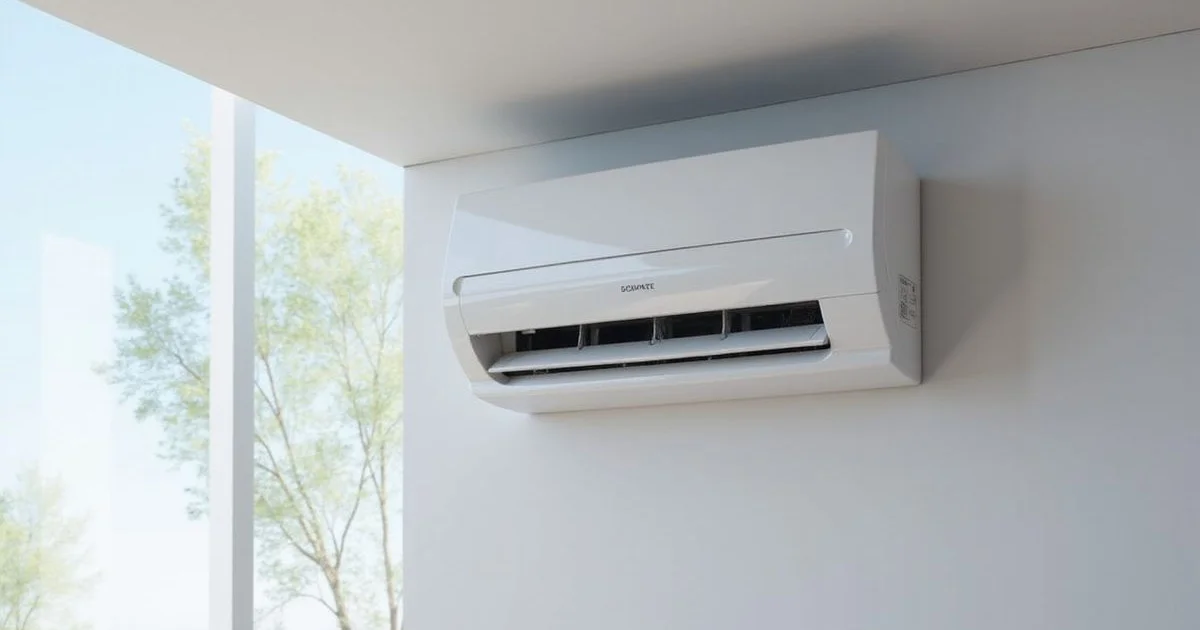
Our standard cooling units already function as highly effective dehumidifiers. Warm indoor air passes directly over the freezing cold evaporator coils during cool mode. Moisture then condenses out, collects in the drain pan, and flows safely outside.
We track the performance of popular wall-mounted units in Singapore homes. The Hitachi airHome 400 can extract up to 3.3 litres of water per hour under optimal conditions. Unfortunately, the compressor may reach your set temperature and cycle off before adequately reducing the sticky feeling.
Common signs of poor moisture removal include:
- Clammy feeling on your skin despite low room temperatures.
- Musty odours lingering near the indoor blower.
- Condensation forming rapidly on glass surfaces.
Our repair teams frequently see perfectly chilled rooms that still feel terribly clammy. Dedicated standalone dehumidifiers, such as the Mitsubishi Electric MJ-EV38HR-A, can remove up to 38 litres a day. Strategic use of your current wall unit is usually enough to achieve similar results.
Using Dry Mode Effectively
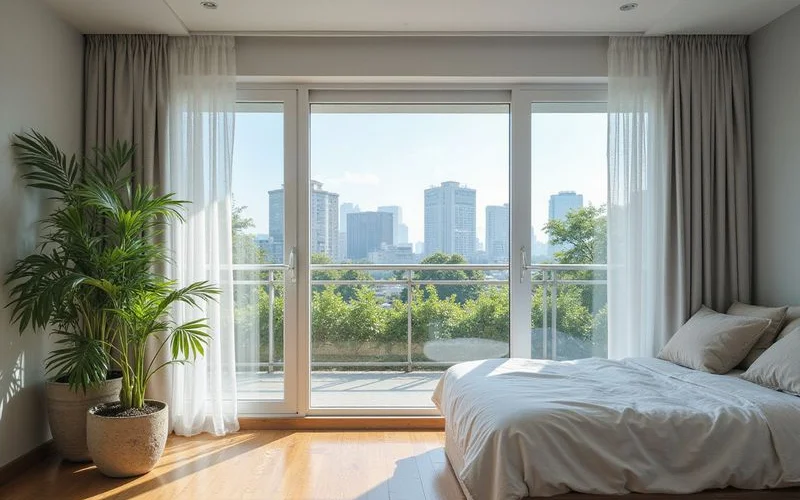
Our top recommendation for muggy evenings is pressing the water droplet symbol on your remote control. This specific setting activates dry mode for targeted humidity removal. The compressor runs intermittently rather than continuously.
| Feature | Standard Cool Mode | Energy-Saving Dry Mode |
|---|---|---|
| Primary Function | Lowers room temperature | Extracts excess moisture |
| Power Consumption | 500 to 900 watts/hour | 200 to 500 watts/hour |
| Compressor Cycle | Runs continuously until cool | Runs intermittently |
| Fan Speed | Auto or High | Locked to Low |
Here is exactly what happens inside the machine during dry mode:
- The blower fan runs on a low speed to maximise contact time between the humid air and cold coils.
- The room temperature drops less aggressively than standard cooling.
- The system prioritises moisture extraction over pure chilling.
We advise using this specific setting to save serious money. A typical unit drawing 900 watts in cool mode will only consume about 300 watts in dry mode. The National Environment Agency (NEA) actively promotes using these energy-efficient features to lower monthly utility bills.
When to use dry mode:
- In the evening when outdoor temperatures naturally drop to 26 or 27 degrees.
- During the monsoon season when ambient moisture spikes above 90%.
- In rooms where you want absolute comfort without aggressive chilling.
- As a smart first step before switching to cool mode to improve efficiency.
Practical Tips on How to Reduce Humidity at Home with Your Aircon
Our daily habits play a massive role in indoor climate control. These targeted adjustments will maximise the moisture-removing power of your current setup.
1. Keep Windows and Doors Closed
Our technicians constantly remind clients that sealing the room is the single most vital rule. Humid outdoor air rushes inside every time you open a window. Leaving a bedroom door slightly open to a warm living room easily increases energy consumption by 40%.
We see compressors working overtime just to neutralize the warm air constantly flowing through these gaps. Keeping the space completely sealed is essential for effective climate control. Draft stoppers placed under doors provide an incredibly easy and cheap fix for this hidden issue.
2. Use Exhaust Fans When Cooking and Showering
Our specific measurements show that everyday household activities generate massive amounts of hidden moisture. A single hot shower releases up to 2.5 litres of water vapor straight into the air. Cooking on the stove easily generates another full litre of dense steam.
Common sources of rapid indoor moisture include:
- Boiling water for pasta or soup without using a lid.
- Taking long, hot showers with the bathroom door left wide open.
- Leaving damp towels out to dry inside the bedroom.
We always recommend running exhaust fans during these activities and for at least 15 minutes afterwards. A kitchen without proper mechanical ventilation adds litres of moisture directly to the indoor environment. Your cooling system will severely struggle to cope with this heavy extra load.
3. Do Not Dry Laundry Indoors with Aircon Running
Our experts strongly advise against hanging wet clothes inside an air-conditioned bedroom. Medical professionals warn that drying laundry indoors pushes humidity levels up by 30 percent within just one hour. This rapid rise creates the absolute perfect environment for dangerous Aspergillus mould spores to thrive.
We suggest using a separate HDB service yard or a mechanical tumble dryer if you must wash clothes at night. Hanging wet laundry in a cooled room forces the compressor to run continuously. Removing the evaporating moisture from wet fabrics wastes a truly massive amount of electricity.
4. Service Your Aircon Regularly
Our maintenance crews know that a dirty unit completely fails at dehumidification. Dust-clogged coils restrict vital airflow and drastically reduce the cold surface area available for condensation. A blocked drainage pipe causes water to back up into the room.
We encourage booking professional servicing every three months to keep your unit running at its absolute peak. Filthy internal filters reduce the total heat exchange rate and increase daily power consumption significantly. A thorough chemical wash instantly restores the ability of heavily soiled coils to condense moisture efficiently.
5. Check for Condensation Issues
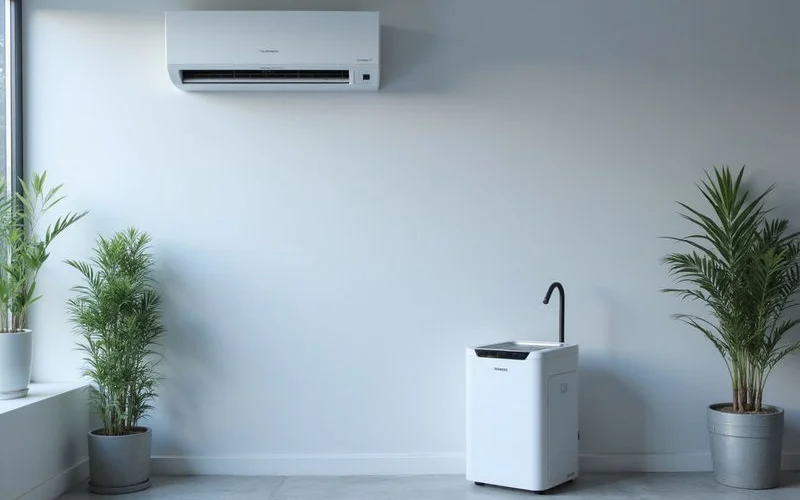
Our repair teams frequently encounter condensation forming on the aircon unit or pipes across many residential estates. This visible sweating usually indicates serious issues with the insulation, low refrigerant gas levels, or a poor drainage gradient. These underlying mechanical problems severely cripple the moisture-extracting performance of the entire machine.
Key areas to check for unwanted condensation include:
- The copper pipe connections directly near the indoor fan coil.
- The outer surface of the plastic casing during heavy operation.
- The wall areas right around the PVC drainage pipe exit.
We urge property owners to address these sweating pipes promptly before expensive water damage occurs. Industry standards in Singapore highly recommend using 13mm thick Class 1 Armaflex insulation rather than the thinner 9mm variant. Upgrading to thicker insulation wraps completely stops the warm ambient air from meeting the freezing cold copper pipes.
6. Consider Room Size vs Aircon Capacity
Our installation guidelines always stress the absolute importance of proper capacity sizing. A standard modern HDB BTO bedroom is around 9 to 12 square meters. A 9,000 BTU unit is perfectly adequate for this specific space.
We often find that installing an oversized 12,000 BTU unit just to be safe actually creates a massive indoor climate problem. The powerful system cools the small space too quickly and cycles off prematurely. This rapid short cycling prevents the machine from running long enough to extract any meaningful moisture.
7. Run the Fan After Turning Off Cool Mode
Our final tip is to run the fan mode for 15 minutes after switching off the cooling function. Residual moisture remains trapped directly on the dark evaporator coils when the compressor shuts down. The Centers for Disease Control and Prevention (CDC) warns that mould grows within 48 hours in high humidity.
We use the basic fan setting to completely dry the interior parts and drastically reduce bacterial growth. Preventing this fungal buildup ensures your machine maintains its full dehumidification capacity for many years to come. This incredibly simple habit keeps the blowing air smelling fresh, clean, and healthy.
The Mould Connection
Our region’s intensely tropical climate makes high indoor humidity the primary cause of rapid fungal growth in homes. Destructive spores appear on painted walls, wooden ceilings, expensive furniture, and deep inside the cooling unit itself. Keeping your indoor moisture levels consistently below 65% significantly reduces this health and property risk.
Signs that your home humidity is dangerously high:
- Musty smells greeting you the moment you enter the room.
- Visible black spots creeping along the bathroom walls or ceilings.
- Condensation permanently fogging up your glass windows.
- Clothes hanging in your wardrobes feeling damp to the touch.
- Important paper documents curling up at the edges or feeling soft.
We recommend booking an immediate service if your system runs constantly but the indoor air stays feeling wet. Unchecked moisture sources hidden inside the building structure might even require professional waterproofing attention. A well-maintained cooling setup in a properly sealed room easily and comfortably maintains a 55 to 65% range.
Ideal Indoor Humidity for Singapore
Our handy reference chart below outlines the exact target ranges you should aim for in your home. Combine this proper moisture control with the right temperature settings for a perfectly comfortable night in this tropical climate. Maintaining these precise targets guarantees a much healthier living environment for your family.
| Humidity Level | Comfort Impact | Mould Risk | Recommended Action |
|---|---|---|---|
| Below 50% | Too dry, irritates skin | Very low | Reduce aircon usage slightly |
| 50-60% | Ideal and crisp | Low | Maintain current settings |
| 60-70% | Acceptable but noticeable | Moderate | Monitor closely and ventilate |
| Above 70% | Uncomfortable and sticky | High | Use dry mode immediately |
We hope these practical adjustments help you understand exactly how to reduce humidity at home with your aircon. Managing this hidden moisture effectively is the true secret to beating the intense Singapore heat.
Book a professional cleaning with our friendly team today to ensure your system extracts water at full capacity. Proper maintenance will keep your home feeling perfectly crisp and comfortable all year round.
Billy Aircon Team
Technical Writers
The Billy Aircon editorial team draws from our 26-strong workforce of experienced aircon technicians.