Aircon Gas Leak: Signs, Dangers & What to Do
Suspect your aircon has a gas leak? Learn the warning signs of a refrigerant leak, the health and safety dangers involved, and what steps to take immediately in Singapore.
Billy Aircon Team
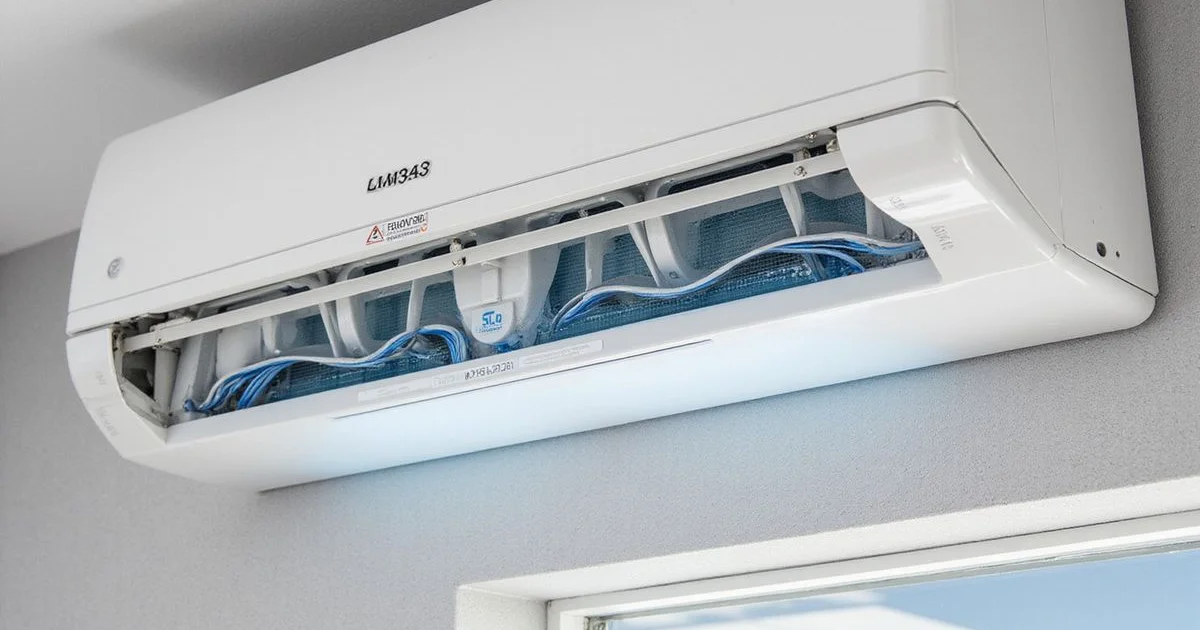
You know how frustrating it is when a reliable aircon suddenly stops blowing cold air right in the middle of a hot afternoon. This specific issue usually requires investigating an aircon gas leak: signs, dangers & what to do. Many people assume they just need a quick chemical refill to fix the problem.
Our team at Billy Aircon has grown from five to 26 members since 2003, all dedicated to keeping Singapore cool.
A simple top-up is rarely the actual solution. The real answer involves finding the exact breach in the closed system.
We will break down the data behind these leaks, the early warning signs, and the practical steps to repair them properly. Scheduling aircon servicing in Singapore regularly is the best way to catch these issues before they escalate. Let us explore the facts and look at the best ways to respond.
Aircon Gas Leak: Signs, Dangers & What to Do
We use refrigerant as the chemical compound to absorb heat from indoor air and release it outside. This gas travels in a closed loop from the indoor evaporator coils to the outdoor condenser coils. Most modern units in Singapore now use R32 refrigerant, as the National Environment Agency banned the sale of older high-GWP models back in 2022 to prepare for a greener 2026.
Our technicians note that R32 is highly energy-efficient and has a Global Warming Potential of just 675. Older models running on R410A have a massive Global Warming Potential of 2088, which explains why the industry has shifted entirely.
| Feature | R32 Refrigerant | R410A Refrigerant |
|---|---|---|
| Global Warming Potential (GWP) | 675 (Lower) | 2,088 (Higher) |
| Energy Efficiency | High (10-15% less electricity) | Standard |
| Singapore NEA Status (2026) | Mandatory Standard | Phased Out |
The entire circuit is completely sealed and should never lose gas under normal operation. A properly installed air conditioner can run for a decade without needing extra chemical.
We know that if the level drops, there is a physical leak somewhere in the system. Finding this exact breach is the only way to restore proper cooling, and an accurate diagnosis saves you money in the long run.
Signs Your Aircon Has a Gas Leak
1. Reduced Cooling Performance
Our customers usually notice a drop in cooling power before anything else. The air conditioner runs, but the air coming out feels barely cooler than a standard fan. You might keep lowering the temperature on the remote, but the room stays uncomfortably warm.
We highly recommend reading more about what to do when your aircon is not cold. An early check prevents the compressor from working itself to death.
A normal aircon in Singapore should have a temperature drop of about 10 to 12 degrees Celsius between the return air and supply air. Anything less than this suggests there is not enough refrigerant to absorb heat effectively.
2. Ice Formation on Pipes or Coils
We often find solid ice building up when refrigerant levels drop too low. The remaining gas expands too much inside the evaporator coils, causing a sudden pressure drop. This excessive expansion forces the temperature to plummet well below freezing.
Our repair teams frequently see ice forming on the copper pipes connecting the indoor and outdoor units. You might also spot frost directly on the evaporator coils when you open the front panel.
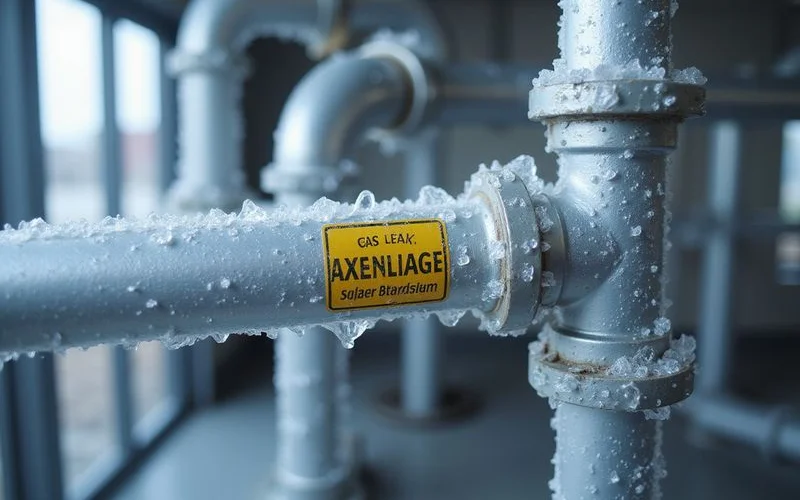
A quick visual check can save you from a massive repair bill later.
We always advise turning the unit off immediately if you see this ice buildup. Running it in this state causes severe damage to the internal components. Prevention is always better than a costly overhaul.
3. Hissing or Bubbling Sounds
Our ears are trained to catch the faint hissing sounds that indicate gas escaping. These auditory clues are subtle but highly revealing.
- A hissing noise usually points to a high-pressure crack in the discharge line or a faulty flare joint near the outdoor unit.
- Bubbling sounds suggest the leak is located at a point where refrigerant meets condensation, often near the expansion valve.
- A sudden whooshing noise means a major valve seal has failed completely.
- Faint whistling happens when gas squeezes through a microscopic pinhole in the copper.
We find that these sounds are often very quiet and hard to notice during a busy day. You will usually only hear them at night when the room drops below 30 decibels. Paying attention to these strange noises is a great way to catch leaks early.
4. Higher Electricity Bills
Our data shows that a leaking aircon works significantly harder to cool a room. The compressor has to run much longer to try and reach your desired temperature setting. This increased workload translates directly into higher electricity consumption on your monthly bill.
A typical four-room HDB flat might see an extra $30 to $50 added to their monthly expenses just from one struggling unit.
We constantly remind customers about the recent 2026 SP Group tariff rates. With household electricity tariffs currently sitting at 29.11 cents per kWh including GST, an inefficient aircon gets very expensive. Catching a leak early protects your wallet from these unnecessary energy costs.
5. Aircon Takes Longer to Cool
Our standard testing shows that a healthy 9,000 BTU system cools a typical 15 square metre HDB bedroom in about 10 to 15 minutes. Even if your leaking unit eventually reaches the set temperature, it takes noticeably longer than before. A room that used to cool down quickly might now take 30 minutes or never quite get there.
You will notice the delay the moment you walk into the bedroom after work.
6. The Compressor Runs Constantly
We expect a normal compressor to cycle on and off as the room temperature fluctuates. With a gas leak, the compressor runs non-stop because it can never achieve adequate cooling. This constant operation puts a massive and dangerous strain on the internal motor oil.
Our technicians warn that continuous running is the fastest way to destroy your system. It forces the equipment to work under conditions it was never designed for. Ignoring this red flag leads to total system failure.
Where Leaks Commonly Occur
We service thousands of units across Singapore and consistently see the same weak points. Formicary corrosion is a major culprit, causing tiny pinhole leaks on evaporator coils due to household chemicals and humidity.
- Flare joints loosen over time due to constant vibration and temperature cycling.
- Copper pipe bends can develop stress cracks, especially with poor piping installation.
- Evaporator coils suffer from pitting and corrosion in Singapore’s highly humid indoor environment.
- Condenser coils face constant exposure to heavy rain, debris, and salt air in coastal areas like East Coast or Pasir Ris.
We strongly recommend using thicker copper pipes to prevent these pressure cracks. The Building and Construction Authority guidelines highlight SWG 22 pipes, which are 0.71 millimetres thick. Many older installations use thinner SWG 23 pipes that are 0.61 millimetres thick and far more prone to leaking under pressure.
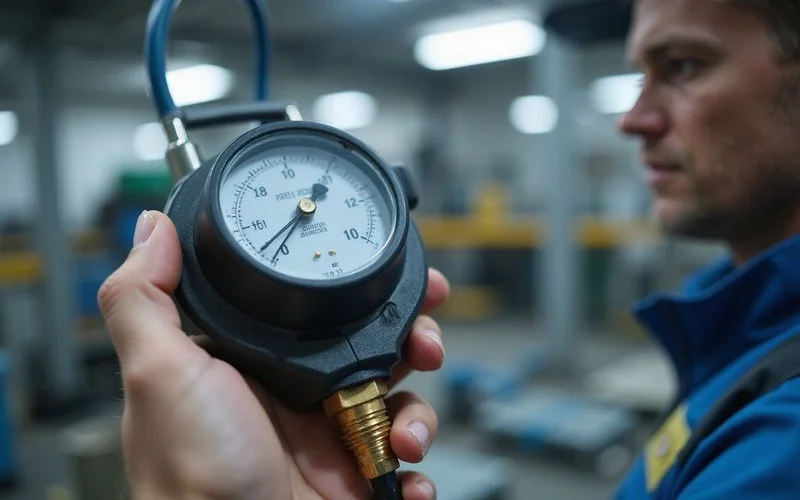
A proper installation uses the right materials from day one to avoid these structural failures.
Dangers of a Refrigerant Leak
Health Concerns
Our priority is always safety when dealing with escaping chemicals inside a home. Modern refrigerants like R410A and R32 are generally non-toxic in small residential amounts. R32 is classed as mildly flammable, meaning a significant leak in a tiny, unventilated room poses a slight risk if it displaces enough oxygen.
We advise you to ventilate the room immediately if you smell a sweet chemical odour. Opening the windows allows fresh air to circulate and removes the immediate danger. You should then call a professional to inspect the setup safely.
Compressor Damage
Our records show countless compressors failing because they were forced to run dry for weeks. The compressor relies completely on this gas for the lubrication and cooling of its internal moving parts. Prolonged operation with low levels causes the unit to overheat and eventually seize up entirely.
We know that an aircon compressor replacement in Singapore currently costs between $600 and $1,500 in 2026, depending on the brand and horsepower. This makes it the single most expensive repair you can face for your cooling system. Fixing a small leak early is much cheaper than replacing a burned-out unit.
Environmental Impact
Our industry must address the severe environmental consequences of leaking refrigerant. The Kigali Amendment to the Montreal Protocol drives the strict regulations you see locally today.
- These chemical compounds act as highly potent greenhouse gases when released directly into the atmosphere.
- The older R410A refrigerant has a global warming potential 2,088 times greater than carbon dioxide.
- Collective residential leaks contribute heavily to national carbon emissions.
- Prompt repairs help Singapore meet its 2030 target to cap emissions at 60 million tonnes.
We support the shift to R32 specifically to cut down on this environmental damage. Repairing these faults promptly minimizes your household carbon footprint.
What to Do If You Suspect a Leak
We strongly advise against simply asking for a temporary fix when you suspect a leak. This patch only treats the symptom, meaning the expensive chemical will just escape again. You will find yourself paying for another gas top-up in a few weeks or months.
Our licensed technicians deploy specialized diagnostic equipment to find the actual source of the problem. A professional will use an electronic sniffer tool or perform a rigorous nitrogen pressure test.
- The standard nitrogen test involves pumping the system up to 250 to 600 psi to locate the exact drop in pressure.
- Technicians spray a soap solution on suspected joints to watch for bubbling under high pressure.
- We always insist on sealing the leak completely before adding any fresh refrigerant into the loop.
- Depending on the location, reliable repair methods include brazing cracked pipes or replacing stripped flare nuts.
- In severe cases, you might need to replace an entire section of piping to guarantee safety.
Our team also recommends considering a full system check after finding one fault. A thorough inspection during a chemical wash can identify other weak points before they burst. It is much more cost-effective to address every worn component during a single service visit.
Prevention
We believe that regular maintenance is the absolute best way to prevent sudden gas leaks. Catching a small pressure drop early saves the entire system from severe stress.
- You should schedule routine servicing so technicians can check refrigerant pressure early.
- The National Environment Agency recommends setting your aircon to 25 degrees Celsius for optimal efficiency.
- Our maintenance data shows that forcing the unit below 24 degrees puts unnecessary strain on the copper pipes and the compressor.
- Proper installation with correct pipe bending techniques and tight flare joints is also critical.
- You must protect the outdoor condenser unit from physical impacts and keep the surrounding area clear of blocking debris.
We remind property owners to check their pipe insulation regularly. Exposed pipes are highly susceptible to corrosion from Singapore’s intense 77 percent average indoor humidity. Upgrading to half-inch thick Armaflex Class 0 insulation offers much better protection than the standard three-eighths inch material.
A solid layer of premium insulation stops condensation dead in its tracks.
Conclusion
Our policy at Billy Aircon is to locate and repair the leak permanently before topping up the gas.
It costs slightly more upfront than a quick fix, but it saves you from paying repeatedly for lost chemicals. Protecting your system with timely repairs ensures a longer lifespan and restores reliable cooling performance.
We are ready to help if you suspect an aircon gas leak: signs, dangers & what to do are exactly what our experts handle every single day across the island. Contact a qualified technician today to secure your indoor comfort and keep your monthly utility bills low. Do not wait for a minor pressure drop to become a major compressor replacement.
Billy Aircon Team
Technical Writers
The Billy Aircon editorial team draws from our 26-strong workforce of experienced aircon technicians.