Aircon Bracket & Mounting Guide for Singapore
Everything you need to know about aircon brackets and mounting in Singapore. Covers HDB and condo regulations, bracket types, safety requirements, and common installation mistakes.

Billy Aircon Team
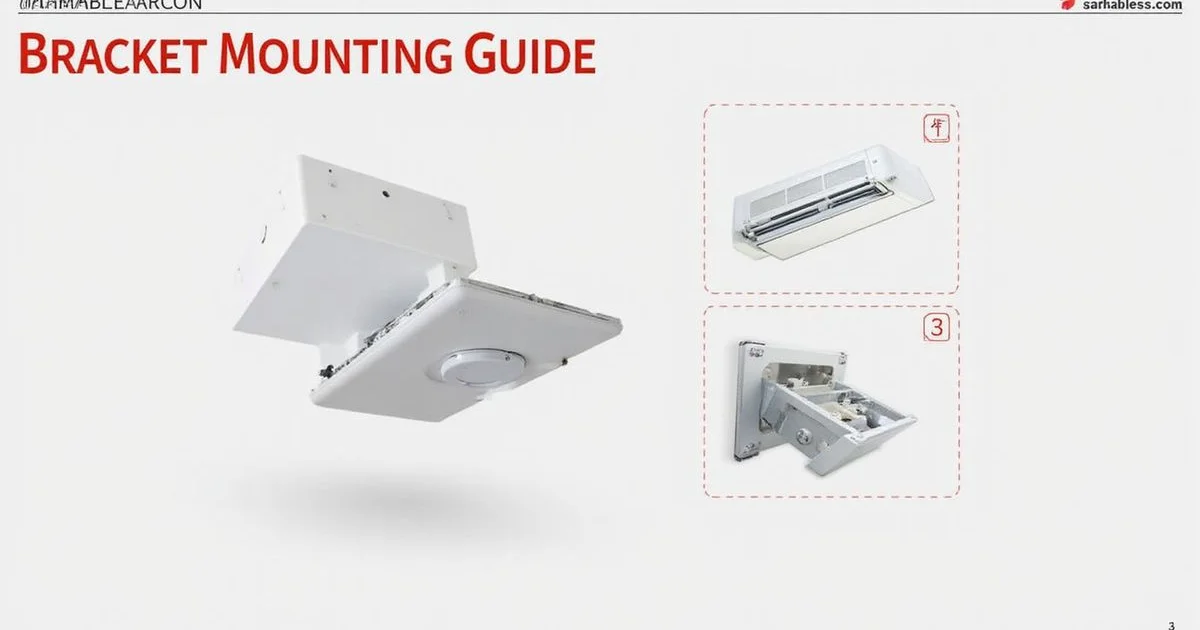
From what our technicians observe daily, property owners almost completely ignore their condenser support structures until a serious problem occurs. The heavy outdoor unit of your cooling system typically weighs between 30 and 60 kilograms, sitting outside your home constantly exposed to harsh weather and mechanical vibration.
A falling compressor can damage property below or severely injure a pedestrian.
Every property owner needs a reliable Aircon Bracket & Mounting Guide for Singapore to prevent catastrophic structural failures.
Our team at Billy Aircon started back in 2003 with just five technicians. Fast forward to today, the 26 staff members currently working here, handling everything from aircon servicing to complex installations, still encounter the exact same dangerous mounting mistakes. Properly securing these heavy units requires strict adherence to local building codes.
Let us look at the official data, what the regulations actually require, and then explore a few practical ways to keep your system securely mounted.
Types of Aircon Brackets
L-Bracket (Wall-Mounted)
The L-bracket remains the most common mounting solution in older Singapore flats. Installers bolt two sturdy, L-shaped steel supports directly to the wall, and the heavy outdoor unit sits securely on top. This standard setup requires strict adherence to specific weight guidelines.
Our installation crew relies heavily on SS304 grade stainless steel brackets for these jobs. This premium material easily supports the massive 83kg weight of modern multi-split units like the Daikin iSmile Series.
- Maximum supported weight is typically up to 50kg per individual condenser arm.
- The Housing and Development Board (HDB) enforces a firm limit of 110kg per wall panel for these installations.
- Technicians must drive heavy-duty M10 expansion bolts deep into the structural concrete.
Platform Bracket
A flat metal platform supports the entire base of the outdoor compressor. This design offers superior stability for heavier multi-split models weighing between 40 and 60 kilograms.
The solid base also provides excellent vibration dampening compared to standard L-brackets.
We frequently install platform brackets in newer Build-To-Order (BTO) flats and condominium developments where the compressor sits on a designated, recessed ledge. This layout prevents the equipment from projecting out over common areas.
Floor Stand
Contractors use a floor stand when the condenser rests on a flat horizontal surface. Common locations include open rooftops, ground-level yards, or reinforced concrete ledges.
The elevated stand lifts the machinery off the floor to permit proper airflow underneath.
Our preferred setup involves using thick rubber base mounts to raise the unit by at least 150mm. This critical gap prevents rainwater from pooling around the metal base and accelerating rust.
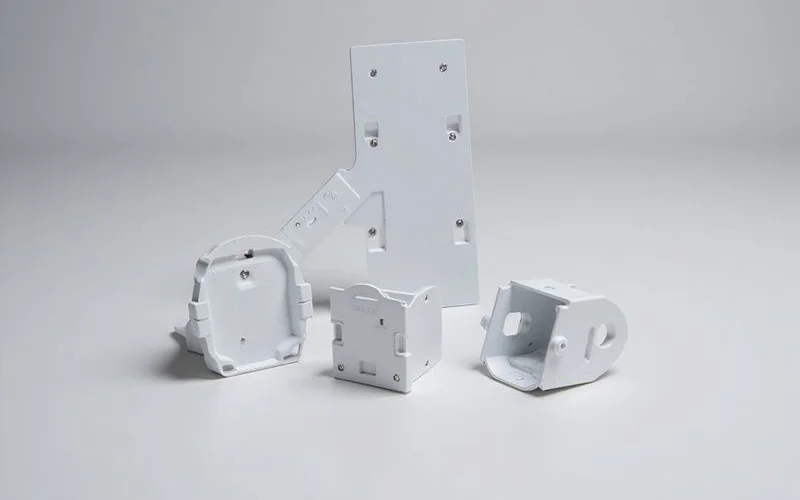
Material Selection Guide
Before selecting a specific bracket design, property owners must choose the correct metal composition for the local climate.
| Material Type | Average Lifespan | Best Application |
|---|---|---|
| Galvanised Steel | 7 to 10 years | Dry, sheltered yard areas where budget is a primary concern. |
| Stainless Steel (Grade 304) | 15+ years | External HDB walls and coastal properties. Mandated by the Building and Construction Authority for projecting units. |
| Aluminium | 10+ years | Lightweight single-split compressors installed in highly corrosive coastal environments. |
Aircon Bracket & Mounting Guide for Singapore: HDB Regulations
The Housing and Development Board enforces strict rules regarding where and how external compressors can be placed.
Our technicians always verify that the concrete facade can safely handle the additional weight before drilling into older housing blocks. Flats constructed before the mid-1990s usually lack dedicated external ledges. Wall-mounted stainless steel brackets provide the only legal solution for these older properties.
Here are the primary regulations you must follow to avoid heavy penalties:
- Designated locations only: Homeowners must place equipment on the official concrete ledge without blocking common corridors.
- Strict weight limits: Each structural wall panel has a maximum load capacity of 110kg, and HDB permits a maximum of two split-type condensing units per flat.
- Electrical constraints: Older flats built before 1994 often feature a 30-amp main switch. This older infrastructure restricts your total aircon running current to just 8.5 amps.
- Mandatory certification: You are legally required to hire a Building and Construction Authority (BCA) certified installer for any external mounting work.
- Official documentation: The certified technician must submit Form AC-02 to the HDB via the e-feedback portal within 14 days of completion.
Failing to submit the AC-02 documentation can result in a maximum fine of $5,000 under current BCA guidelines.
Condo Regulations
Condominium Management Corporation Strata Title (MCST) boards enforce their own strict by-laws alongside national building codes.
We strongly advise clients to review their specific estate renovation handbook before making any purchases. Management teams typically require a refundable security deposit ranging from $1,000 to $2,000 before allowing contractors on site.
- Approved positioning: Compressors must sit in designated enclosures or concealed ledges to maintain building aesthetics.
- Unit restrictions: Estates strictly limit the total number of outdoor compressors permitted per apartment.
- Working hours: Management teams generally restrict drilling and heavy installation work to weekdays between 9 AM and 5 PM.
- Private property reporting: Your installer must submit Form AC-01 to the BCA within 14 days of completing private estate work.
Always secure written permission from your building management before scheduling an installation. Proceeding without the proper permits often results in heavy financial penalties or a forced removal at your own expense.
Safety Requirements for Bracket Installation
Material and Coating
The local climate punishes cheap metal hardware relentlessly. The Building and Construction Authority mandates the use of stainless steel brackets for any unit that projects outwards from a building exterior.
This strict regulation prevents catastrophic structural failures. Cheap uncoated iron fixtures can completely rust through in just two to three years when exposed to the humid, salt-laden coastal air of Singapore.
We exclusively utilize SS304 grade stainless steel to guarantee long-term safety and compliance.
Bolt Specifications
Proper expansion bolts must handle the full machinery weight plus a substantial safety margin. Fastening bolts into soft exterior finishes is a guaranteed recipe for a dangerous collapse.
A secure mounting system relies on three critical factors:
- Using M10 x 75mm stainless steel drop-in anchors for maximum grip.
- Deep penetration directly into the structural concrete wall.
- Complete avoidance of superficial brick or soft plaster layers.
Vibration Isolation
Thick rubber pads sit between the metal casing and the supporting frame to absorb mechanical shaking. The running compressor will transmit intense vibrations straight through the metal frame and into your bedroom wall without these dampeners.
This direct energy transfer creates a loud, constant humming noise inside the room.
Our installation standard includes fitting 15mm to 20mm ribbed neoprene rubber pads on every single mount. This simple addition directly eliminates the common noise complaints associated with thinner partition walls.
Clearance
Every condenser requires generous surrounding space to expel heat efficiently. Restricted airflow causes internal components to overheat and dramatically shortens the lifespan of your expensive machinery.
Manufacturers like Mitsubishi outline exact ventilation requirements in their technical manuals. Always maintain these minimum distances:
- At least 300mm behind the unit to protect the wall.
- At least 500mm in front of the unit for unobstructed hot air discharge.
- At least 150mm of open space on each side.
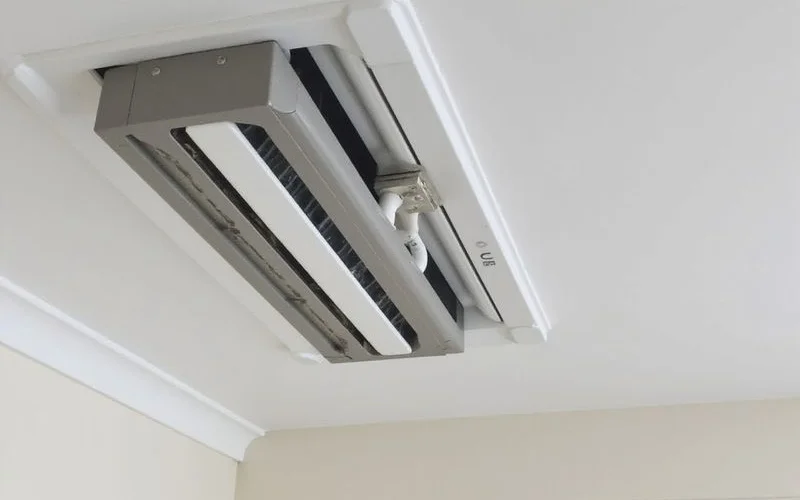
Common Bracket Installation Mistakes
Using Undersized Bolts
Inexperienced contractors sometimes use shorter or thinner bolts to save a few dollars on materials. A standard 2-inch anchor simply lacks the pull-out strength required to secure an 80kg condenser.
These inadequate fasteners slowly pull out of the concrete under the heavy, vibrating load of a running machine.
We replace dozens of these failing supports every year before they snap completely. The resulting structural failure poses a massive safety risk to pedestrians walking below.
Skipping the Level Check
Failing to perfectly level the supporting frame forces the compressor to operate at a slight tilt. This uneven angle disrupts the internal oil distribution needed to lubricate the motor properly.
Operating at a slant accelerates mechanical wear and makes the entire system run significantly louder. Installers must use a highly accurate digital spirit level across both mounting arms before tightening the final nuts.
Ignoring Drainage Slope
The machinery tray should feature a tiny, deliberate tilt of one to two degrees directed at the 16mm PVC drainage pipe. This microscopic slope ensures that condensation runoff flows away quickly instead of pooling at the base.
Stagnant water sitting inside the casing rapidly accelerates rust on the internal metal panels.
Our quality assurance process always includes pouring a bottle of water into the tray to verify proper drainage speed.
Bracket Corrosion
Saltwater air aggressively attacks metal fixtures in coastal neighbourhoods. Homeowners who ignore rusty supports face severe legal consequences under current safety laws.
You should be especially vigilant if your property is located in these specific zones:
- Pasir Ris
- Sentosa
- East Coast Park
The Building and Construction Authority can issue a maximum fine of $20,000, or a jail term of up to one year, if a poorly maintained bracket collapses and falls.
When to Replace Brackets
Visual inspections provide the best defence against a dangerous structural failure. Property owners should arrange for a professional assessment immediately if they spot specific warning signs.
We recommend scheduling an inspection if your current galvanised steel supports are approaching the end of their typical 7 to 10-year lifespan. Look out for these indicators:
- Deep, flaking rust that has eaten past the protective surface coating.
- Wall anchors that have visibly loosened or shifted outward from the concrete.
- A previously level compressor that now sags or leans to one side.
- Sudden, loud rattling noises that indicate the frame has warped.
- Upgrading to a modern, heavier multi-split system that exceeds the old frame’s original weight limit.
Catching these issues early prevents minor rust spots from turning into deadly hazards.
Cost of Bracket Replacement in Singapore
Historically, a basic frame change cost around $80 to $200. As of 2026, a standard mounting frame replacement typically costs between $150 and $280 in Singapore. This updated price depends heavily on the stainless steel market, the size of the compressor, and external accessibility.
This small maintenance fee remains completely negligible compared to the massive fines and liability involved in a structural collapse.
Our installation technicians at Billy Aircon use strictly certified SS304 stainless steel frames rated for your specific equipment weight. A professional replacement package typically includes:
- Heavy-duty M10 expansion bolts.
- 15mm ribbed rubber dampeners.
- Submission of mandatory BCA and HDB safety forms.
Include a thorough hardware inspection as part of your regular aircon servicing routine. Address minor rust spots immediately before they become major structural hazards.
Proper piping and insulation are equally important parts of a quality setup. Ensure your chosen contractor addresses these distinct aspects simultaneously to maximize energy efficiency.
This Aircon Bracket & Mounting Guide for Singapore provides the essential knowledge you need to secure your cooling system. Taking these proactive steps ensures your property remains fully compliant with local laws.
Billy Aircon Team
Technical Writers
The Billy Aircon editorial team draws from our 26-strong workforce of experienced aircon technicians.