Best Aircon Temperature for Sleep in Singapore
What is the ideal aircon temperature for sleeping in Singapore? Learn the science-backed recommendations, energy-saving tips, and how to optimise your aircon settings for a good night's rest.

Billy Aircon Team
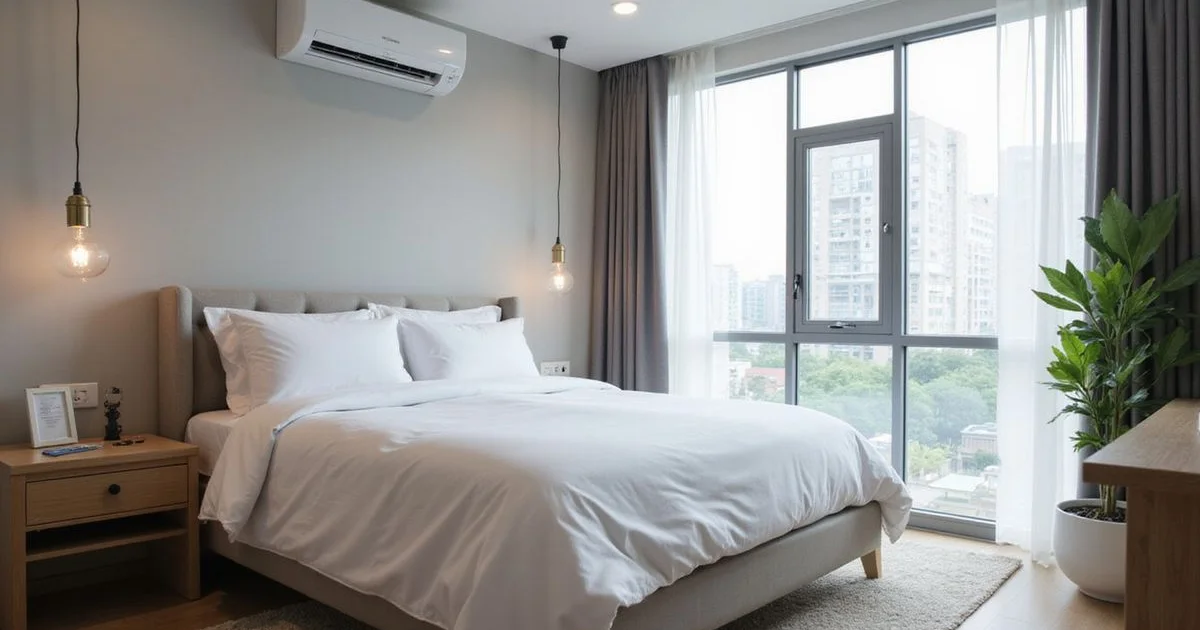
We frequently see property owners trying to find the Best Aircon Temperature for Sleep in Singapore by setting their units to a freezing 20 degrees. You probably know that this common habit disrupts your natural rest cycle.
It also drives up your monthly utility bills unnecessarily.
Our team at Billy Aircon, which has grown to 26 dedicated aircon servicing technicians since 2003, has spent over two decades observing these cooling patterns across the island. Let’s look at the data to understand the science of sleep temperature and explore the exact settings that will keep you comfortable.
The Ideal Temperature for Sleep
We know that global sleep research often creates confusion for residents in tropical climates. The National Sleep Foundation officially recommends a chilly 15.5 to 19.4 degrees Celsius for optimal rest.
Local bodies are heavily acclimatised to the equatorial heat, making those international guidelines far too cold for comfort.
Our actual recommendation aligns with the National Environment Agency (NEA) of Singapore, which states that 24 to 26 degrees Celsius is the optimal baseline. A setting of exactly 25 degrees strikes the perfect balance between your physical comfort and energy efficiency.
Key benefits of the 24 to 26 degree range:
- Aligns with the NEA guidelines for optimal energy savings.
- Supports the natural drop in your core body temperature.
- Prevents you from waking up shivering or sweating.
- Reduces the workload on your outdoor condenser.
- Lowers your general energy expenditure significantly.
We always advise our customers to aim for this specific 24 to 26 degree window. At this range, your body can successfully lower its core heat naturally as it prepares for deep rest.
You will remain comfortable throughout the night using just a light blanket.
Our technicians also note that your compressor runs far more efficiently at these settings, preventing excessive wear and tear. Data shows that for every degree you lower your thermostat below 24 degrees, your energy consumption surges by 5 to 10 percent.
This efficiency directly translates to lower electricity consumption over the long term.
Why Temperature Affects Sleep Quality
Your body follows a strict circadian rhythm that triggers a natural drop in core heat every evening. This physical change acts as a vital signal for your brain to release melatonin, the primary hormone responsible for making you feel sleepy.
We often explain to clients that a warm room forces your body to fight against this natural cooling process. You will inevitably toss and turn while struggling to fall asleep.
“A bedroom that is too hot prevents the necessary drop in core body temperature, while a freezing room forces your body to expend energy generating heat.”
Our understanding of local weather patterns highlights why mechanical cooling is essential. Recent 2026 data from the Meteorological Service Singapore shows that night temperatures rarely dip below 26 degrees Celsius.
Indoor spaces without proper ventilation frequently stagnate at 28 to 30 degrees.
We consider an air conditioner a genuine necessity for restorative rest in this climate, rather than a luxury appliance. Relative humidity levels regularly stay between 80 and 90 percent at night, making a moderately warm room feel incredibly uncomfortable without active cooling.
The Humidity Factor
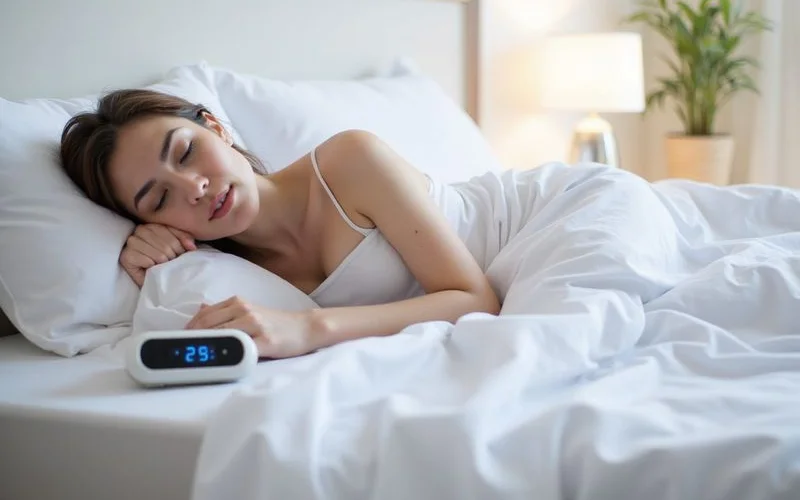
Temperature readings alone never tell the complete story of bedroom comfort. Singapore experiences intense nighttime moisture levels that frequently peak above 90 percent just before sunrise.
We constantly remind homeowners that high moisture levels severely impact how a room actually feels. Dense air prevents your sweat from evaporating efficiently, making a standard 26 degree room feel heavy and suffocating.
Our technicians always emphasize the importance of active dehumidification for a good night of rest. A standard cooling cycle naturally extracts some water vapor from the indoor atmosphere as it lowers the ambient heat.
You might find 25 degrees perfectly fine on the thermometer but still wake up feeling uncomfortably clammy.
We diagnose this specific complaint as a moisture problem rather than a true cooling failure.
To fix this common issue, try running your unit on dry mode for the first hour of the evening. This setting prioritises water extraction over active cooling, which uses significantly less electricity.
Our team highly recommends this tactic before switching back to your standard cooling settings for the rest of the night. You can find additional strategies for reducing humidity at home in our dedicated guide.
| Feature | Cool Mode | Dry Mode |
|---|---|---|
| Primary Function | Lowers room temperature | Removes air moisture |
| Compressor Usage | High (runs until temp is met) | Low (runs in short bursts) |
| Best Time to Use | Throughout the night | First hour before bed |
Recommended Aircon Settings for Sleep
Finding the perfect balance requires tuning multiple settings on your remote control.
We have compiled a proven configuration strategy based on thousands of residential service calls. Applying these specific adjustments will drastically improve your nightly comfort and lower your utility bills.
Smart controllers from brands like Mysa or Aqara can even automate these changes for you.
Temperature: 24 to 25 Degrees
Start your adjustments by locking the thermostat between 24 and 25 degrees. If you find yourself reaching for a blanket, you are currently at the correct baseline.
We suggest lowering the thermostat by a single degree the following night if you still feel too warm.
Discovering your personal preference usually takes a short period of trial and error.
Fan Speed: Low or Auto
A low fan speed generates minimal acoustic noise, which is critical for an undisturbed resting environment. Most modern indoor blower units produce less than 22 decibels on their lowest setting.
We strongly advocate using the automatic fan feature if your specific brand supports it.
The internal blower will ramp up initially to chill the space and automatically drop to a whisper quiet low speed afterward.
Mode: Cool Mode with Sleep Function
Virtually all contemporary brands feature a dedicated sleep program, frequently marked by a moon icon on the remote control. Daikin’s iSmile series and Night Set Mode automatically raise the baseline by 0.5 degrees after thirty minutes, and another 0.5 degrees after an hour.
We highly praise this intelligent function for its energy saving capabilities. Mitsubishi’s equivalent mode similarly scales back compressor power as your metabolism slows down.
Our calculations show this gradual adjustment perfectly mirrors your biological needs while cutting unnecessary power drain. The compressor does less work during the early morning hours when the outdoor environment is naturally cooler.
Timer: Use It
Setting an automatic shutoff timer two to three hours before your alarm rings is a brilliant efficiency hack. A standard concrete HDB flat or condominium with closed windows retains chilled air quite well.
We frequently see well insulated rooms stay completely comfortable long after the compressor shuts down. You will already be transitioning into lighter resting phases by the time the ambient heat slowly rises.
As a different strategy, program the system to turn off after four hours and power back up sixty minutes before you wake. This targeted approach delivers heavy cooling only when you need it most.
Our clients who adopt this split schedule report massive savings during their deepest resting phases. You get to enjoy the comfort of falling asleep fast and waking up refreshed.
The Electricity Cost of Sleeping Cold
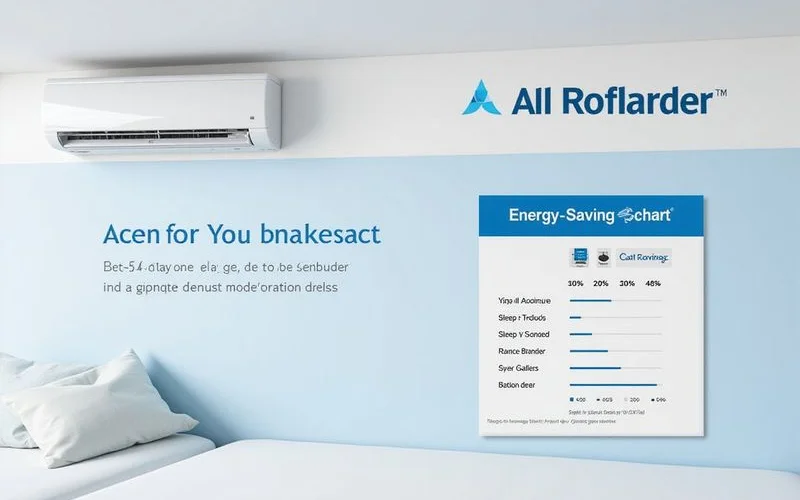
Forcing your compressor to maintain 20 degrees instead of 25 degrees creates a massive financial burden. Every single degree you drop below the optimal zone forces the system to consume roughly 5 to 10 percent more power.
We strongly advise clients to review their utility statements to see the real world impact of this habit.
The Energy Market Authority and SP Group updated the residential electricity tariff to 29.11 cents per kWh with GST for the first quarter of 2026.
Our technicians calculated the financial impact over a standard month of nightly use. The table below illustrates the estimated expenses for a typical 12,000 BTU cooling system running eight hours a night at this new 2026 tariff rate.
| Setting | Estimated Monthly Cost (12,000 BTU, 8hrs/night) |
|---|---|
| 20 degrees | $110 to $130 |
| 22 degrees | $95 to $110 |
| 24 degrees | $80 to $95 |
| 25 degrees | $70 to $85 |
These figures are baseline estimates applied to a modern 4-tick energy rated unit. Actual billing amounts will always fluctuate based on your equipment’s age, maintenance history, and room insulation.
We guarantee that selecting 25 degrees with a thin blanket will easily save you 30 to 45 dollars every month on a single bedroom unit.
Over the course of an entire year, those simple adjustments keep between 360 and 540 dollars right in your pocket.
Tips for Better Sleep Without Lowering the Temperature
Achieving a deep slumber does not strictly require a freezing room environment. Implementing a few complementary strategies will change how your bedroom feels at night.
We have collected numerous environmental hacks that enhance your comfort without touching the thermostat.
Using the right bedding and ventilation tricks can make a 25 degree room feel like 22 degrees.
- Deploy a DC motor fan alongside your cooling unit. A modern standing fan generates gentle air movement that makes a 25 degree room feel significantly chillier. The electrical cost of running an oscillating fan is virtually unnoticeable on your monthly bill.
- Invest in high quality breathable bedding. Premium options like Heveya’s 100 percent bamboo lyocell or Heavenluxe’s pure TENCEL sheets actively wick sweat away from your skin. Heavy synthetic polyester blends trap body heat and create a miserable microclimate under the covers.
- Block out radiant solar heat. Pull your thick blackout curtains closed right before sunset to block the late afternoon rays. West facing HDB flats and condominiums absorb massive amounts of thermal energy that slowly bleeds into the bedroom all night.
- Schedule consistent preventative maintenance. A clean blower pushes chilled air faster and requires less electrical effort to hit its target. Booking regular servicing ensures your filters and coils never become clogged with household dust.
- Take a warm shower right before getting into bed. The warm water safely elevates your surface skin temperature for a few minutes. Stepping into a conditioned space then triggers a rapid internal cooling response that signals your brain it is time to rest.
When Your Aircon Cannot Keep the Bedroom Cool
Sometimes, an unresponsive thermostat indicates a hidden mechanical failure inside the system. If you set the dial to 24 degrees and still feel warm, the hardware itself is likely struggling to cope.
We regularly diagnose underperforming units that simply cannot reach their set targets. A system operating under mechanical stress will blow lukewarm air indefinitely.
Our field technicians frequently encounter these specific hardware failures during nighttime performance inspections:
- Refrigerant leaks: A slow drop in gas pressure forces the compressor to run constantly without delivering any actual cooling power, which you can identify through our low refrigerant guide.
- Choked evaporator coils: Deeply soiled internal components restrict basic airflow, making a comprehensive chemical wash absolutely necessary to restore circulation.
- Defective sensors: A faulty thermistor can easily transmit false temperature readings, tricking the primary motherboard into shutting the compressor down prematurely.
- Clogged PM 2.5 filters: Modern units trap ultra-fine dust, but a severely blocked filter prevents cold air from pushing into the bedroom.
Catching these specific red flags early prevents expensive hardware replacements down the line.
We highly encourage readers to review the most common signs your aircon needs repair before a minor issue causes a total system breakdown.
Achieving Your Ideal Nightly Rest
Consistent upkeep is the absolute key to surviving a humid tropical environment.
Finding the Best Aircon Temperature for Sleep in Singapore transforms your physical health and protects your wallet.
Our experienced technicians at Billy Aircon are always ready to restore your system to its peak factory specifications.
Reach out to our friendly service desk today to schedule a comprehensive inspection and secure a perfectly chilled bedroom.
Billy Aircon Team
Technical Writers
The Billy Aircon editorial team draws from our 26-strong workforce of experienced aircon technicians.