How to Choose the Right Aircon for Your HDB or Condo
Buying a new aircon for your HDB flat or condo? This guide covers BTU sizing, brand comparisons, energy ratings, and installation considerations specific to Singapore homes.
Philips
Many homeowners face a sudden spike in their electricity bills after moving into a new place. Our technicians usually find the culprit is an oversized or undersized cooling unit working twice as hard as it needs to, a problem that proper aircon servicing would catch early. This costly error happens constantly across Singapore.
We founded Billy Aircon in 2003, and the team has since grown to 26 professionals who have installed thousands of units.
Figuring out How to Choose the Right Aircon for Your HDB or Condo is a financial priority before you sign any renovation contracts. Our goal is to help you find a setup that keeps you comfortable without draining your wallet over the next decade. The data reveals exactly what the numbers actually mean for your space.
We will now explore a few practical ways to make a smart purchase.
Step 1: Determine the Right BTU for Your Room
Finding the correct BTU is your first major hurdle. Our experience shows that buying a unit with too little capacity means the compressor runs non-stop without ever cooling the room. Getting a massive unit causes it to short cycle.
We always warn customers that this constant switching on and off wastes electricity and creates uncomfortable temperature swings. BTU stands for British Thermal Unit, which measures the cooling capacity of your system.
BTU Guide for Singapore Rooms
| Room Size | BTU Needed | Typical Room |
|---|---|---|
| 100-150 sq ft | 9,000 BTU | HDB bedroom |
| 150-250 sq ft | 12,000 BTU | Master bedroom, small living room |
| 250-350 sq ft | 18,000 BTU | HDB living/dining area |
| 350-500 sq ft | 24,000 BTU | Large condo living room |
| 500+ sq ft | 28,000+ BTU | Open-plan condo, penthouse |
These figures account for the year-round tropical climate. Our installers note that a standard new BTO master bedroom sits around 130 to 160 square feet. A 12,000 BTU unit fits perfectly for these main bedrooms to ensure rapid, consistent cooling.
We highly recommend adding 10 to 20 percent more cooling capacity for rooms that face west or sit on the top floor. These sun-facing spaces absorb significantly more heat throughout the afternoon.
Step 2: How to Choose the Right Aircon for Your HDB or Condo Space
Wall-Mounted Split Units
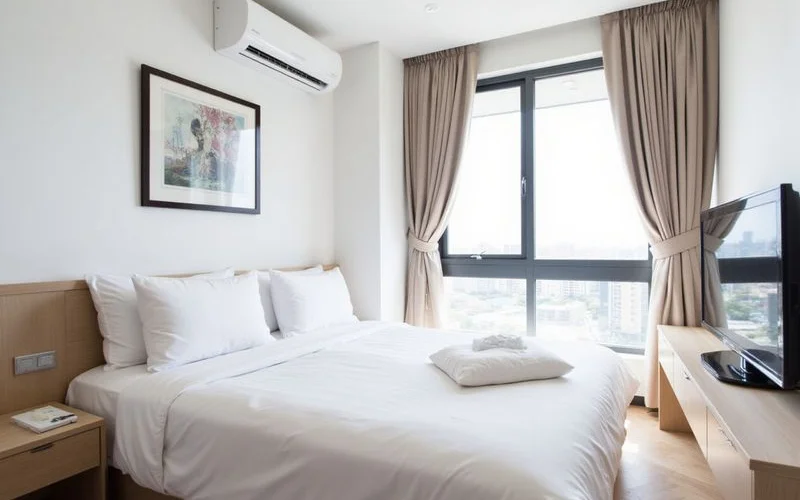
This is the standard choice for almost every residential flat in Singapore. Our team always suggests these for individual room cooling because they are highly targeted. One indoor blower sits in your room, connected to a single compressor outside.
We often install multi-split systems that connect two to five indoor blowers to just one outdoor compressor. This specific setup saves precious space on your outdoor ledge.
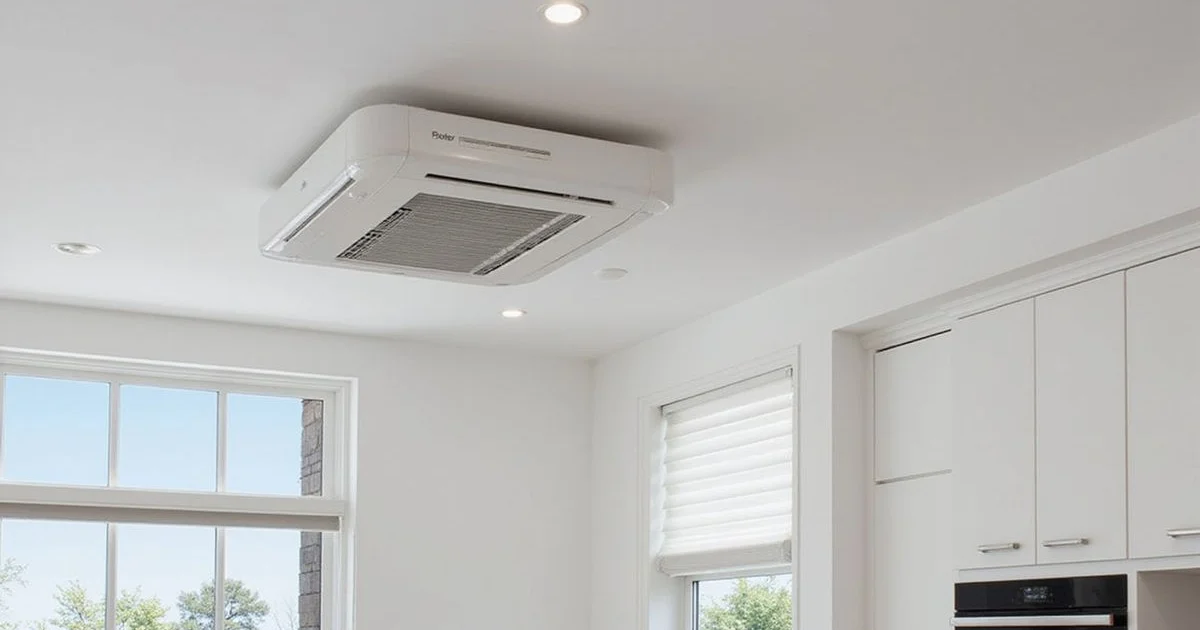
Ceiling Cassettes
These units sit completely flush with your ceiling. We frequently install these in large condo living rooms and commercial offices. They distribute chilled air evenly across much larger spaces.
Our technicians will need a false ceiling with a minimum drop of 250mm to accommodate the installation. This clearance ensures the unit operates silently and efficiently.
Understanding System 2, 3, and 4
A System 3 means one outdoor compressor runs three indoor blowers. We usually present this as the standard configuration for a typical 4-room flat. The main benefit is freeing up space outside.
Our installers strictly follow the HDB weight limits for these configurations:
- Older flats built before 1994 have a 30-Amp switch, capping your outdoor unit weight at 80 kg.
- Newer upgraded flats built after 1994 feature a 40-Amp switch, allowing up to 110 kg per wall panel.
- Each wall panel safely supports only one condenser unit.
The major drawback is that a broken compressor leaves all connected rooms completely warm. We ensure this setup covers three bedrooms and the main living area perfectly.
Step 3: Understand Energy Labels
The National Environment Agency mandates energy labels for all domestic units. We encourage every customer to pay close attention to this rating. The rating goes from one to five ticks under the Mandatory Energy Labelling Scheme.
Our data shows that a minimum of two ticks has been the legal standard since 2022, but higher ticks indicate superior efficiency.
| Ticks | Efficiency | Electricity Impact |
|---|---|---|
| 1-2 ticks | Below average | Higher electricity bills |
| 3 ticks | Average | Standard running costs |
| 4 ticks | Good | Noticeable savings |
| 5 ticks | Excellent | Lowest running costs |
A five-tick unit costs roughly $200 to $400 more upfront than a three-tick model. We calculate that current SP Group electricity tariffs sit at approximately 29.11 cents per kilowatt-hour for the first quarter of 2026. This means a five-tick model can save you up to $250 a year on your utility bills compared to lower-rated options.
Our calculations prove that the more efficient unit pays for its price premium within just two years. You should always aim for at least four ticks if your system runs for eight hours every night. We guarantee the long-term financial savings are substantial.

Step 4: Compare Brands Available in Singapore
Daikin
This Japanese manufacturer delivers exceptional reliability and energy efficiency. We find their iSmileEco series particularly popular because it uses eco-friendly R32 refrigerant and offers smart home integration.
The smart timer allows you to customize schedules, so you can easily let the unit sleep in on weekends instead of shutting off at 7 AM. Our technicians love that spare parts are abundant, making future repairs fast and straightforward.
Mitsubishi Electric
Here is another premium Japanese option with outstanding build quality. We strongly recommend their Starmex line for light sleepers because it is famous for an ultra-quiet 19-decibel operation mode.
This near-silent running makes it perfect for standard bedrooms where thin walls fail to block noise. Our sales records show the initial price is higher, but the lifespan easily justifies your investment.
Panasonic
This brand strikes a fantastic balance between reliable performance and upfront value. We suggest Panasonic for households with allergy sufferers or young children.
Their Nanoe-X air purification technology actively inhibits certain bacteria, viruses, and contaminants as tiny as 2.5 microns. Our teams install this brand constantly as it sits comfortably in the middle price bracket.
Midea
This Chinese manufacturer continues to capture significant local market share through aggressive pricing. We install many Midea systems for budget-conscious property investors.
Build quality has improved immensely over the last five years. Our clients find it an excellent choice if they need decent cooling on a strict budget.
LG
The LG Dual Inverter Compressor technology offers impressive energy savings. We often fit LG systems in high-end developments where aesthetics are a top priority.
These units feature sleek, modern designs that appeal heavily to modern interior tastes. Our reviewers note they provide great value in the mid-tier price range.
Step 5: Consider Installation Factors
Buying a premium unit is only half the battle. We know that proper installation dictates how well the system performs and how long it lasts.
HDB Regulations and Requirements
The housing board strictly regulates where your outdoor compressor can sit. We advise you to check these specific rules:
- Outdoor unit placement: You must place the compressor on the designated reinforced aircon ledge.
- Piping length: Keep the run between units short to maintain maximum cooling efficiency.
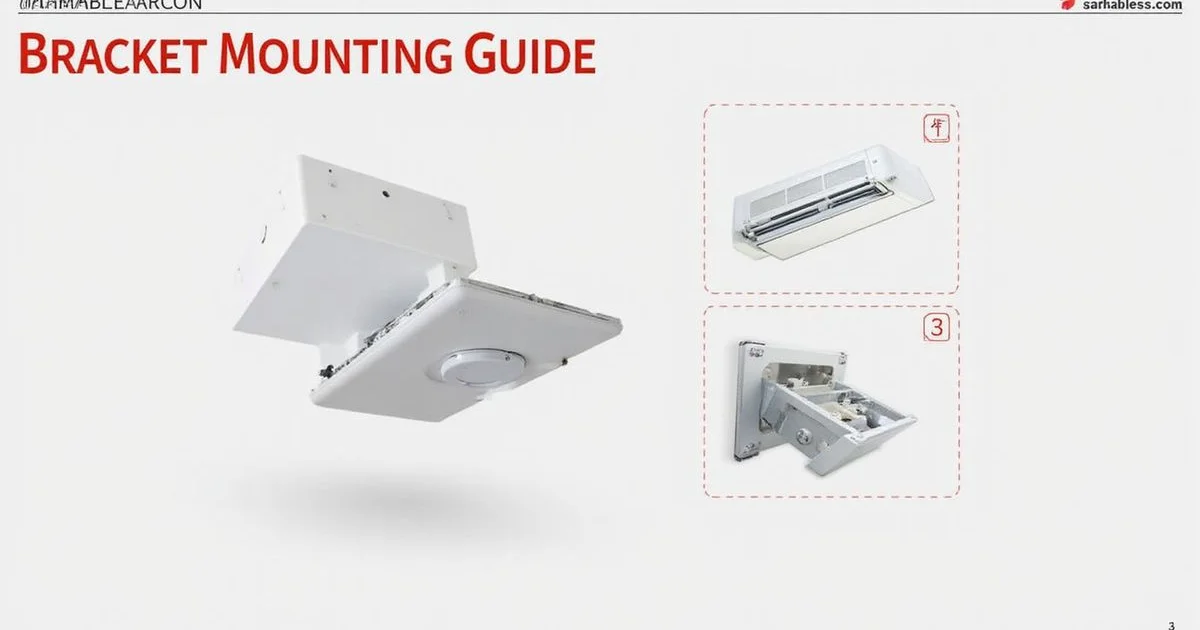
- Secure hardware: Your Brackets and mounting equipment must be BCA-approved Grade SS 304 stainless steel to prevent rust and accidents.
- Proper drainage: Your installer must create a slight gradient to let water flow naturally to the discharge point, which prevents nasty leaking issues.
Condo Specifics
Private developments have their own management rules regarding acceptable brands and placements. Our project managers will help you verify these guidelines before buying anything:
- Management approvals: Adding extra outdoor compressors for a multi-split setup often requires a formal application.
- Ceiling constraints: The space needs at least 250mm of void clearance for cassette installations.
- Drainage systems: Check if your building uses a centralised condensation pipe, as this specific feature changes the fitting process.
Step 6: Factor in Running and Maintenance Costs
The initial purchase price is just the beginning. We strongly advise tracking operational costs to avoid unexpected financial surprises and keep your warranty valid.
Monthly and Yearly Expenses
Booking a Standard servicing appointment every three to four months keeps your system running up to 15 percent more efficiently. Our maintenance logs show these four main expenses dominate the typical lifecycle:
- Electricity: Running a 12,000 BTU unit for eight hours every night costs roughly $80 to $120 a month, depending on your SP Group tariff and energy rating.
- Routine general servicing: Expect to pay between $30 to $50 per unit for standard cleaning and filter checks.
- Annual deep clean: You will need a thorough chemical wash once a year, which costs between $70 to $150 per unit in 2026, to flush out deep-seated mould and jelly-like blockages.
- Refrigerant maintenance: Systems with slow leaks might occasionally require gas top-ups ranging from $70 to $120 for modern R32 gas.
Conclusion
For the average flat owner, a multi-split system from Daikin or Mitsubishi with a five-tick rating is your smartest choice. Our team recommends owners of larger properties look at combining wall-mounted blowers with a central cassette in the living room.
A basic unit installed flawlessly will easily outlast a premium unit installed poorly. We urge you to ensure proper installation by qualified technicians to protect your investment.
Start planning your layout today to guarantee you understand How to Choose the Right Aircon for Your HDB or Condo.
Our technicians are ready to map out the perfect cooling strategy for your space once you send us your floor plan.
Philips
Chief Technical Leader
With 25 years of hands-on experience in air conditioning systems, Philips founded Billy Aircon in 2003.